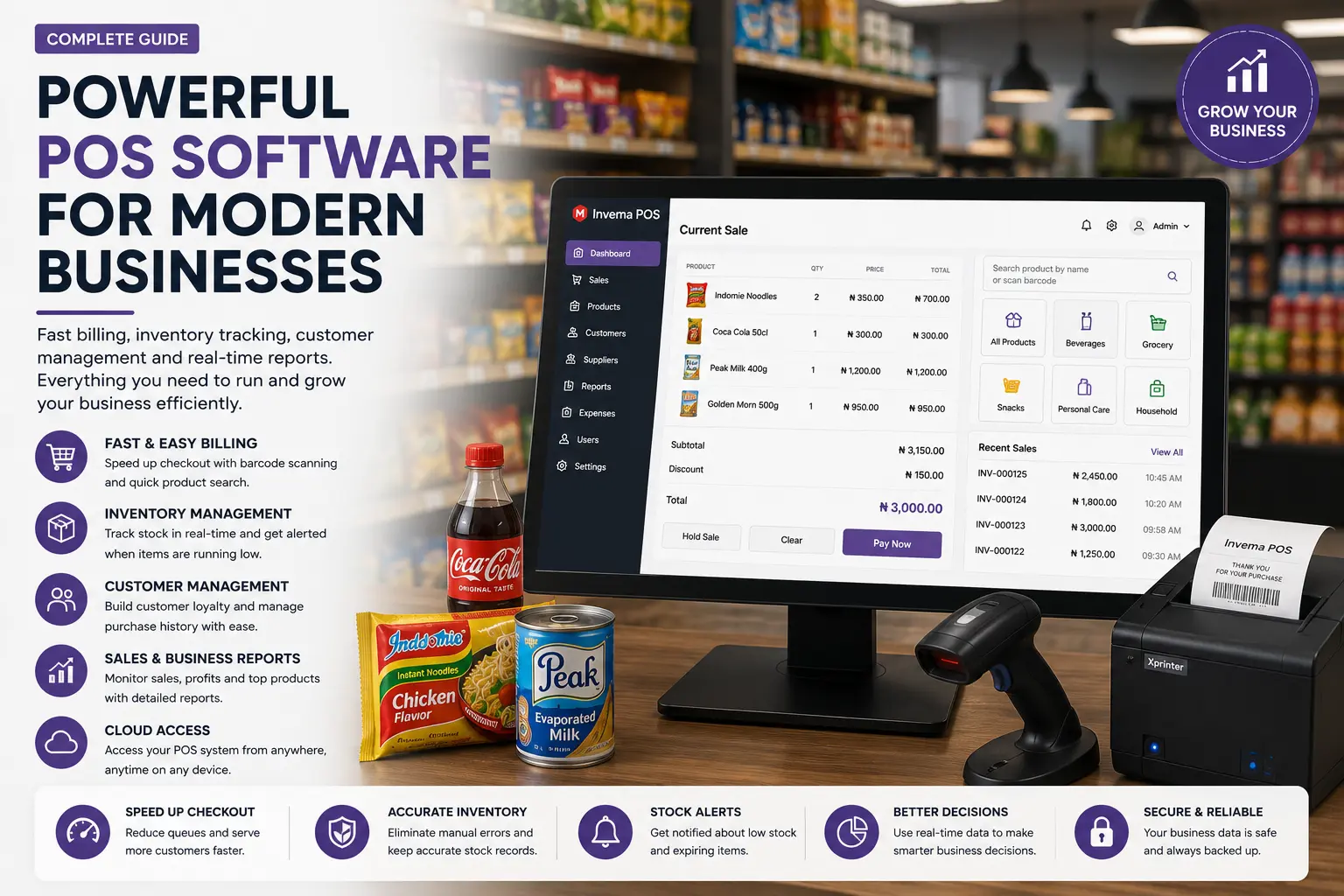
Supermarkets need a POS system that understands stock pressure
Supermarkets handle a unique combination of fast-moving traffic, broad product ranges, frequent replenishment, and constant pricing pressure. A weak point of sale setup creates problems far beyond the checkout area. It slows queues, confuses cashiers, delays reconciliation, and weakens the accuracy of stock reports. That is why supermarket POS software should not be evaluated as a payment tool alone. It should be seen as part of the full inventory control system.
For supermarket operators in Nigeria, speed and accuracy must work together. Customers expect fast service, but management also needs reliable visibility into what is selling, what is missing, and which categories deserve more shelf space. If the POS and inventory records are disconnected, the business loses time reconciling numbers and still ends up with weak confidence in the final reports. A connected platform helps managers trust that every sale affects stock correctly and every stock decision is informed by live activity.
What good supermarket software should support
At the front of house, the system should make checkout fast, intuitive, and dependable. Cashiers should be able to search products quickly, scan items smoothly, and complete transactions without unnecessary delays. At the back of house, the same system should update stock accurately, feed category reports, and highlight best sellers and slow movers. This is why supermarket operators often compare tools using both POS and retail inventory software criteria. The two functions should work together instead of competing for attention.
Supermarkets also need strong category visibility. It is not enough to know total turnover. Management should understand how beverages, provisions, toiletries, frozen goods, snacks, and household items behave differently. Better categorisation makes buying smarter and promotions easier to evaluate. When data quality is strong, the store can decide more confidently which shelf lines deserve investment and which products are only taking up space.
Why branch coordination matters
As supermarket businesses grow into multiple outlets, reporting complexity rises sharply. Owners want to compare performance by branch, identify locations that overstock or understock, and monitor whether promotional items are moving as expected. A connected multi store POS system becomes valuable because it gives management one operational view across outlets. Instead of waiting for separate reports from each location, leadership can see shared product movement and make more timely decisions.
That branch-level view also improves replenishment discipline. One store may be running low on a fast seller while another is holding excess stock. If management can see that clearly, transfers and purchases become more efficient. This reduces avoidable emergency buying and supports better cash allocation across the business.
Why supermarket POS is really an inventory decision
Many businesses choose a POS system based on the appearance of the checkout screen and only later discover that reporting is weak. A better approach is to assess how well the system supports inventory operations overall. Can it surface stockouts early? Can it handle barcode scanning cleanly? Can it support returns and adjustments without creating data confusion? Can it feed the reports required for smarter purchasing? Those questions matter because profit in supermarket operations depends heavily on stock discipline, not only on transaction volume.
Barcode support is especially important in supermarkets because speed and accuracy must coexist. It helps reduce cashier delays, supports faster receiving, and improves stock counts. Businesses comparing barcode inventory software often find that their barcode decision and POS decision should be made together. The tighter the operational connection, the better the final reporting tends to be.
How Nigerian supermarkets can evaluate software well
Start with real workflows instead of vendor promises. Walk through receiving stock, selling fast-moving items, handling returns, doing stock counts, reviewing top sellers, and comparing branch performance. If the software feels slow or confusing during those tasks, the problem will only grow after rollout. Usability matters because supermarkets rely on repeatable speed across many staff and many daily transactions.
The best supermarket POS software is the one that helps the store sell quickly while strengthening inventory control at the same time. It supports faster service, cleaner reporting, smarter replenishment, and more reliable multi-branch management. That combination is what allows supermarkets to grow without losing control of the fundamentals.
Frequently Asked Questions
Should supermarket POS and inventory be in one system?
Yes. When they are connected, stock balances update more accurately and reconciliation becomes much easier for management.
Is barcode scanning essential for supermarkets?
In most cases, yes. It improves cashier speed, receiving efficiency, and stock count reliability.
Can supermarket POS software work for multiple branches?
Yes, if it is built with shared reporting and branch visibility in mind. That is especially important for growing supermarket chains.