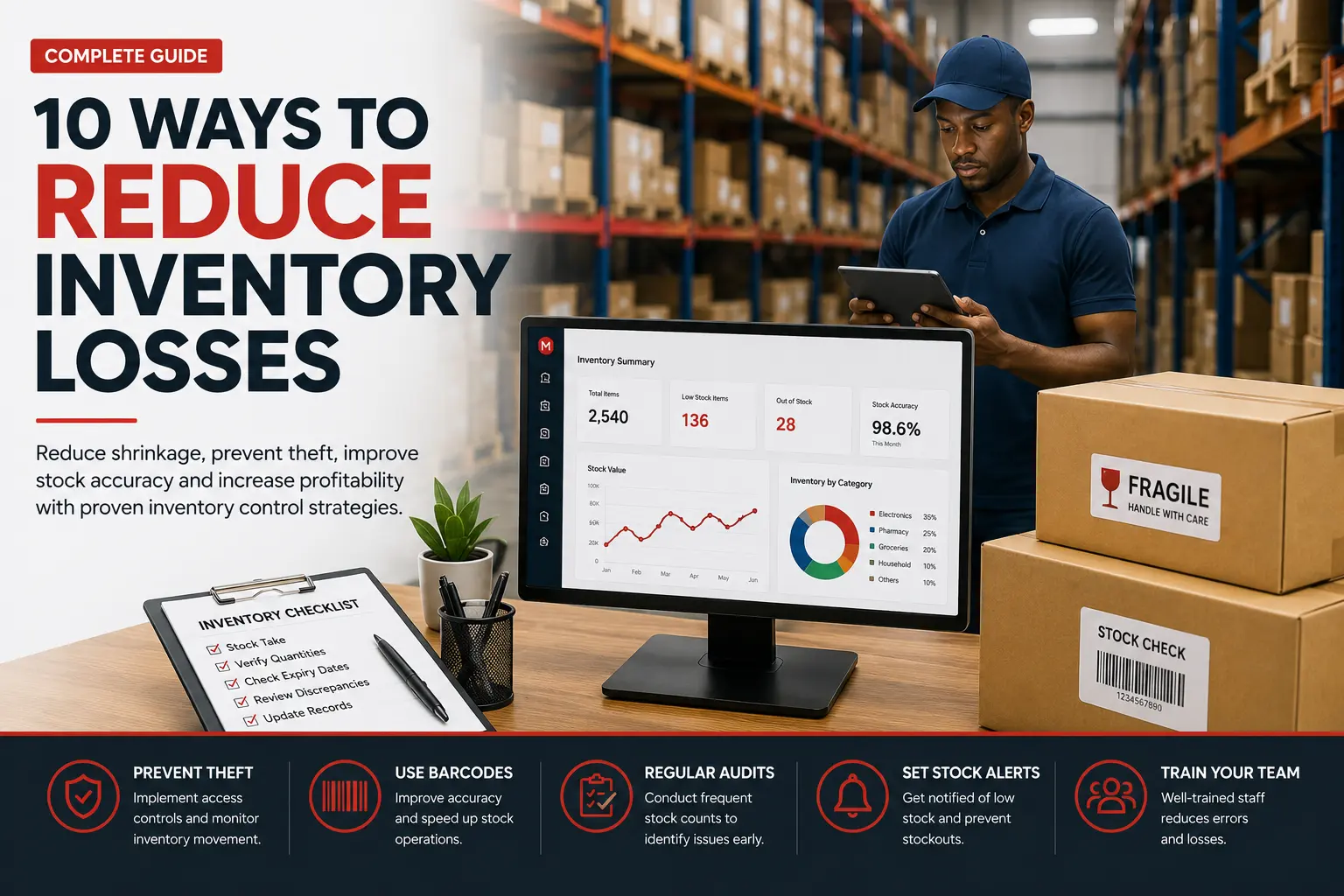
Stock management is a discipline before it becomes a software decision
Many business owners start looking for stock management software after repeated losses make manual tracking feel unsustainable. They have experienced shortages that do not make sense, overstocked items that tie down cash, and reports that arrive too late to support good decisions. What they are really looking for is not just a digital stock book. They are looking for a more reliable operating rhythm. Good software helps build that rhythm because it turns stock control into a consistent process instead of a collection of disconnected habits.
In Nigerian businesses, weak stock control has a direct effect on cash flow. The company may appear busy and still struggle because too much money is buried in products moving too slowly, while key items run out at the worst moment. Stock management software helps by showing what is available, what is moving, what needs replenishment, and where discrepancies are coming from. That visibility allows management to respond earlier and more accurately than manual systems usually allow.
What the right platform should help you control
At the most basic level, the software should track receipts, sales, transfers, adjustments, returns, and current balances. But the real value comes from how those records support better decisions. Can the owner identify fast and slow movers? Can the operations lead see which products are often adjusted? Can the purchasing team buy based on evidence instead of supplier pressure? Can management compare patterns across categories and locations? These are the kinds of questions that separate useful software from a glorified spreadsheet.
Different industries will emphasize different workflows. A warehouse may need heavier transfer and receiving discipline, which is why many businesses compare warehouse inventory software options. Retail teams may care most about fast checkout and clean category reporting, which overlaps with retail inventory software. Pharmacies need expiry and batch sensitivity, making pharmacy inventory software more relevant. The strongest stock systems support these differences without losing ease of use.
Why stock visibility improves profit
When product visibility improves, several profit leaks become easier to address. Managers can cut unnecessary emergency purchases because they know what is actually running low. They can reduce overbuying because demand history is clearer. They can investigate shrinkage with more confidence because user actions are recorded. They can spot products that look busy but contribute weak margin. Even before sales increase, these improvements often create healthier cash flow and better control over working capital.
Visibility also strengthens accountability. Many businesses struggle not because staff are unwilling, but because the process leaves too much room for confusion. If quantities are adjusted casually and no one can trace why, the system invites errors. Stock software creates a stronger audit trail. That makes end-of-day review easier, supports coaching, and reduces the pressure of constant manual oversight. It gives managers a clearer way to separate process gaps from individual mistakes.
Why barcode and multi-branch workflows matter
As operations mature, businesses often expand beyond basic stock records into faster execution workflows. Barcode processes reduce manual entry and improve product lookup speed. Branch reporting helps owners compare inventory efficiency across locations. Connected selling and inventory records reduce reconciliation delays. These are natural growth paths for businesses that start with core stock control and later deepen their systems. That is why articles on barcode inventory software and multi store POS systems are often part of the same research journey.
The software should also fit real operating conditions. Nigerian businesses need tools that can tolerate connectivity challenges and still keep essential processes moving. Offline capability and synchronization matter because interruptions should not force the team back to paper. A platform that works only in ideal conditions usually becomes unreliable in practice. Resilience is part of stock control because the process must continue even when technology conditions are imperfect.
How to choose software without overbuying
One common mistake is buying software based on feature volume instead of workflow fit. The better approach is to list your most expensive stock problems first. Are you dealing with frequent stockouts, poor purchase timing, unexplained losses, weak branch visibility, or slow reconciliation? Once those pain points are clear, you can assess whether a system solves them directly. The best choice is usually the one that helps the team work better every day, not the one with the most complex menu structure.
For growing businesses in Nigeria, stock management software becomes one of the most practical investments they can make. It reduces uncertainty, improves decision speed, and supports cleaner execution across sales, purchasing, and operations. That is why good stock control is not only about counting inventory. It is about creating a business that runs with more confidence and less avoidable waste.
Frequently Asked Questions
Is stock management software the same as inventory software?
They are closely related. In practice, both terms are often used to describe software that tracks stock movement, balances, purchases, and reporting.
What should a growing business prioritize first?
Start with accurate stock movement tracking, clear product setup, staff accountability, and reporting that supports smarter reordering.
Does stock software help small businesses too?
Yes. Small businesses benefit from early control, cleaner records, and better purchasing decisions long before operations become complex.