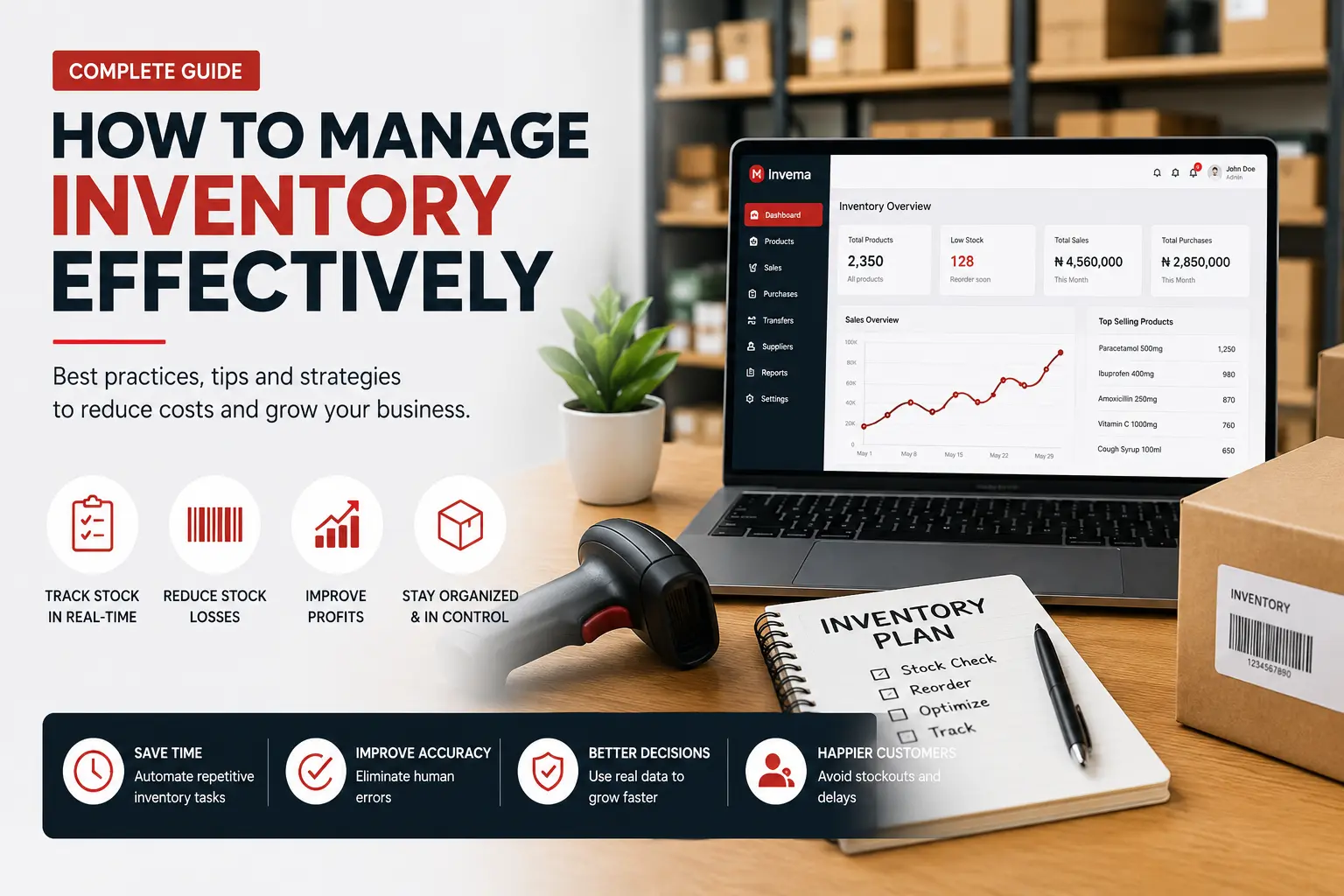
Why inventory software matters more in Nigeria than many business owners expect
Nigerian businesses operate in an environment where cash flow is tight, supply chains can be unpredictable, inflation changes buying behaviour quickly, and internet quality is not always consistent. In that kind of operating climate, weak stock visibility becomes expensive very fast. A pharmacy can overbuy slow moving products, a supermarket can run out of fast sellers during peak hours, and a growing distributor can lose confidence in branch-level reports because stock figures are always behind reality. That is why the search for inventory software Nigeria businesses can truly rely on is not just about buying technology. It is about reducing waste, protecting margin, and making day to day decisions with cleaner information.
Many businesses still begin with notebooks, WhatsApp updates, or spreadsheets. Those tools feel flexible at first, but they become fragile when product lines increase, staff roles expand, and multiple locations need to stay aligned. Once the business grows, teams need more than a record of stock on hand. They need movement history, user accountability, barcode support, reorder visibility, branch comparisons, and reports that help management act before a problem becomes costly. That is where practical cloud software changes the conversation. A good system does not merely store numbers. It improves the way products are received, sold, counted, transferred, and reviewed.
What Nigerian businesses should look for before buying
The first requirement is reliability. If the software depends on perfect connectivity, it will create more frustration than value for many teams. Businesses across Lagos, Abuja, Port Harcourt, Aba, Kano, and other commercial centres need a system that can keep operations moving even when the internet is unstable. Offline capability and dependable synchronization are not luxury features. They are operational requirements. They ensure your cashier can keep selling, your storekeeper can keep receiving items, and your manager can still reconcile activity at the end of the day.
The second requirement is usability. Staff adoption is one of the biggest reasons software projects fail. A platform may have many features, but if the sales team struggles to complete checkout or the store team finds stock updates confusing, bad habits return quickly. Business owners should pay attention to layout, workflow simplicity, permissions, and how easily new staff can learn the system. This matters just as much as reporting power. If you want a platform that can scale into a multi store POS system or support faster retail execution, the interface must stay clear even as complexity grows.
Features that create immediate operational value
For most Nigerian operators, the highest value features are straightforward. Real time stock updates reduce the lag between activity and reporting. Barcode workflows speed up receiving, product lookup, and checkout. Purchase management helps teams buy what is needed instead of guessing. Low stock alerts make replenishment more proactive. Better sales and profitability reports help owners see where capital is tied up in products that are not moving. Together, those features improve stock accuracy while also making the business easier to manage.
Industry context still matters. A retailer evaluating retail inventory software will prioritize speed at the counter, fast-moving product visibility, and clean reconciliation. A warehouse operator comparing warehouse inventory software will care more about receiving discipline, transfers, bin control, and supplier-linked purchasing. A pharmacy looking at pharmacy inventory software needs stronger batch and expiry tracking than a regular shop. One reason generic tools disappoint is that they flatten these differences instead of supporting them.
Common inventory problems software should solve
One of the biggest pain points is stock loss that cannot be explained with confidence. When businesses lack accurate movement records, every shortage turns into a blame game. Was the issue caused by receiving errors, theft, damaged goods, duplicate entries, or pricing mistakes? Inventory software improves accountability because every action leaves a record. Managers can review who created, edited, sold, adjusted, or transferred an item. That visibility makes staff coaching easier and strengthens internal controls without forcing the business into rigid manual oversight.
Another frequent problem is overstocking the wrong products. In many Nigerian businesses, purchasing decisions are still made by instinct or supplier pressure instead of clean demand history. That leads to capital being trapped in slow-moving products while best sellers sell out. A good stock platform surfaces buying patterns clearly enough for the owner or procurement lead to act earlier. The goal is not just to know what is in stock. The goal is to know what deserves more working capital and what should be reordered carefully.
How a strong topical stack supports growth
As the business becomes more sophisticated, the software should support a broader stack of operational improvements. That includes barcode processes for faster execution, stronger stock management software discipline, better POS integration, and multi-branch reporting that highlights performance differences between locations. It should also connect naturally with sector-specific needs like drug expiry management in regulated environments. Businesses do not outgrow good software when the product is designed around real operations. Instead, they deepen their use of it over time.
For many Nigerian companies, inventory control is one of the fastest ways to improve profit without increasing sales volume. Better stock records reduce preventable losses. Cleaner purchasing improves cash flow. Faster checkout raises customer confidence. Management reports become more useful because they are based on current data instead of assumptions. When owners evaluate software with those outcomes in mind, the buying process becomes much clearer. The real question is not whether software is needed. It is which system helps the business operate with more confidence every single day.
Frequently Asked Questions
What type of business needs inventory software in Nigeria?
Any business that buys, stores, sells, or transfers products can benefit. That includes pharmacies, supermarkets, electronics shops, fashion retailers, warehouses, hospitals, and multi-branch businesses.
Should small businesses start with inventory software early?
Yes. Early adoption helps small teams build cleaner habits before operational complexity increases. It is easier to scale a disciplined process than to fix years of poor stock records later.
Can one system support different inventory workflows?
Yes, if the software is flexible enough. Businesses often start with core stock control and later add barcode workflows, branch visibility, expiry tracking, or POS functionality as their operations grow.