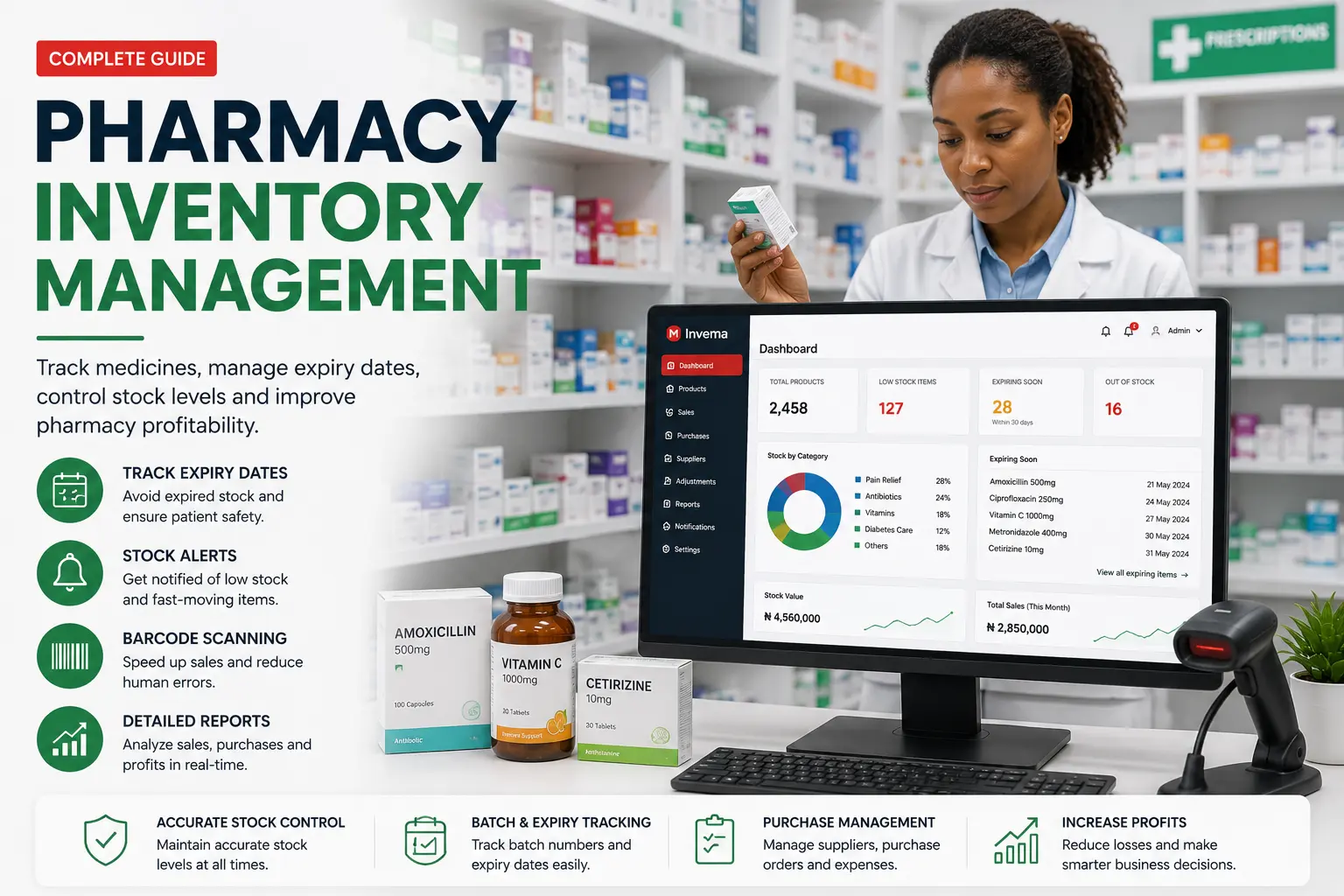
Why pharmacies need more than basic stock tracking
Pharmacies in Nigeria handle inventory that is more sensitive than ordinary retail stock. Medicines have expiry dates, batch numbers, dosage variations, regulated suppliers, and compliance expectations that make poor record keeping especially risky. When staff rely on memory, paper registers, or scattered spreadsheets, the chance of dispensing the wrong batch, overstocking slow movers, or missing near-expiry items rises quickly. That is why pharmacy inventory software is not just a convenience. It is part of building a safer, more profitable operating system for the business.
Many pharmacies begin with simple product lists because they want to move fast. The problem is that medicine operations get complicated quickly. Products can arrive at different costs, different expiry windows, and different sales velocities. Some items move every day, while others are essential but slower. Some are sold per pack, some per unit, and some require tighter internal oversight. A system that only tells you total quantity on hand is not enough. Pharmacies need better visibility into movement, purchase timing, staff actions, and what should leave the shelf before it becomes dead stock.
Key capabilities pharmacy operators should prioritize
The first capability is expiry and batch awareness. A good pharmacy system should make it easy to identify what expires soon, what came from which supplier, and what should be sold first. This becomes even more important in growing practices that also serve clinics or hospitals, where inventory decisions affect service continuity and patient trust. Businesses comparing drug expiry management strategies should treat expiry workflows as a core operational process rather than an occasional review exercise.
The second capability is accurate stock movement tracking. Owners and pharmacists need to see receipts, sales, adjustments, and restocking patterns clearly. That history makes it easier to investigate discrepancies and improve accountability. It also supports better purchasing. Instead of buying by feeling, the pharmacy can use actual movement data to decide which items deserve more working capital. This is one reason businesses exploring pharmacy stock control usually find that stock discipline improves significantly once the software creates a trusted movement record.
How software improves pharmacy profitability
Pharmacy margins are often pressured by inflation, supplier cost changes, and customer sensitivity to price. Profit does not depend only on sales volume. It also depends on avoiding avoidable waste. Expired products, duplicate purchases, missing stock, and poor shelf rotation all erode margin quietly. A well-implemented inventory platform helps by surfacing near-expiry items earlier, highlighting fast and slow movers, and making reorder decisions less reactive. That creates room for smarter cash allocation and fewer emergency purchases.
Operational speed matters too. Staff should be able to look up products quickly, confirm available quantities, complete sales confidently, and track receiving with less manual friction. That is where barcode support and clean workflows become useful, especially for pharmacies with large SKU counts. Businesses that also run front-of-store retail can benefit from concepts shared with barcode inventory software and retail inventory software, but they still need pharmacy-specific oversight for batches and expiry-sensitive stock.
Supporting growth from one branch to several locations
As a pharmacy business expands, the need for coordinated reporting becomes stronger. Management wants to compare stock levels across locations, identify branches that reorder too late, and understand which products perform differently by neighbourhood. Without software, those answers are delayed and often unreliable. A connected inventory platform helps owners monitor multiple branches without forcing each team into disconnected manual routines. It also lays a better foundation for a multi store POS system if the business grows into a broader chain model.
Hospital and clinic-linked pharmacies face an additional layer of complexity. They may need tighter coordination between storekeeping, dispensing, and internal supply requests. That is why operators evaluating hospital inventory software often overlap heavily with pharmacy requirements. The strongest systems make it easier to control both outward sales and internal stock movement while still keeping the interface practical for staff.
What implementation should look like
Successful rollout usually starts with clean categorisation, supplier setup, consistent units of measure, and disciplined receiving. Software works best when the team agrees on how products will be named, how batches will be entered, and who is responsible for approving adjustments. Training should focus on the most frequent workflows first: receiving stock, selling items, checking balances, monitoring expiry, and reviewing daily reports. Once those behaviours stabilize, the pharmacy can expand into deeper analytics and stronger purchasing routines.
For Nigerian pharmacies, the right software is the one that balances compliance awareness, usability, and resilience. It should help reduce waste, improve accountability, and support real trading conditions instead of assuming perfect internet or perfect processes. When that fit is right, inventory management stops being a back-office burden and becomes a clear source of control.
Frequently Asked Questions
What is the biggest risk of poor pharmacy inventory control?
The biggest risk is a mix of expired stock, stockouts on important products, and weak accountability when discrepancies occur. All three affect profit and customer trust.
Do pharmacies need barcode workflows?
They are highly valuable, especially when SKU count is large. Barcode support reduces lookup time, improves receiving speed, and cuts manual entry mistakes.
Can pharmacy software also support hospital-style inventory needs?
Yes, if it has strong stock movement visibility, permissions, expiry tracking, and reporting. Those capabilities matter in both standalone pharmacies and broader care environments.