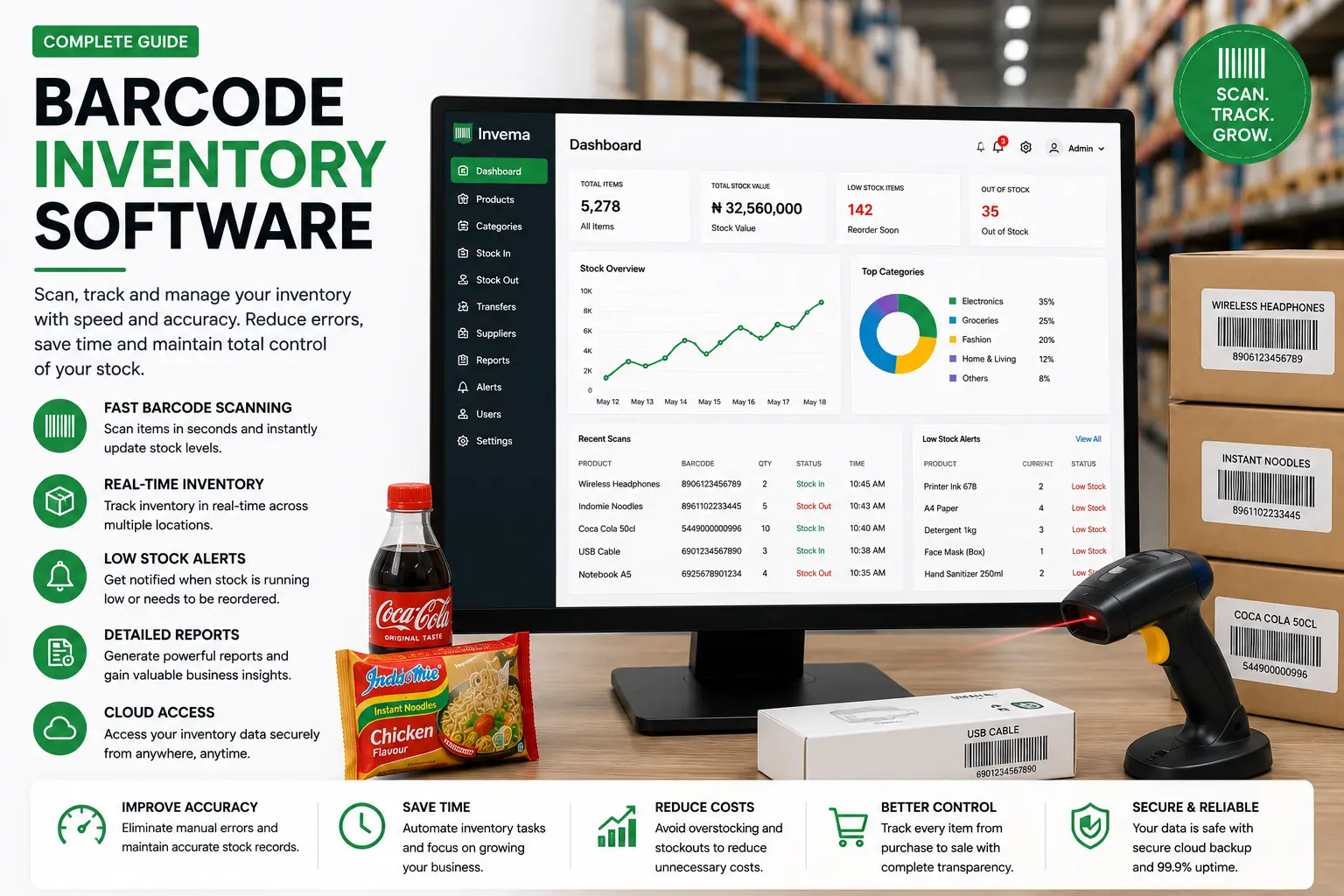
Why barcode workflows matter for modern stock control
Businesses often notice the limits of manual inventory handling when speed becomes a problem. Staff take too long to receive goods, product lookup slows down checkout, and stock counts become tiring enough that they are postponed. Barcode inventory software helps solve those issues because it links physical products to faster, more accurate digital actions. Instead of typing names repeatedly or relying on memory, the team can scan products and move through routine tasks with more confidence.
In Nigeria, this matters across several sectors. Pharmacies use barcode support to improve product identification and reduce handling errors. Retailers use it to accelerate checkout and stock counts. Warehouses use it to speed up receiving and movement confirmation. Even smaller shops gain value because barcode workflows reduce dependence on one experienced staff member who knows every product by heart. A system that supports scanning well often feels simpler to use because it removes unnecessary typing from the busiest parts of the workday.
Operational areas where barcode support creates value
The first area is receiving. When products arrive from suppliers, staff should be able to verify items quickly, confirm quantities, and update stock without repetitive manual entry. Barcode processes make that easier and reduce the chance of creating duplicate products or entering the wrong variant. The second area is point of sale execution. Faster product lookup improves customer experience, especially in busy stores where queues build quickly. This is why businesses researching retail inventory software often treat barcode capability as essential instead of optional.
The third area is stock count discipline. Many businesses delay cycle counts because manual counting and reconciliation are stressful. Barcode support can make counting less tedious and more reliable, which means the team is more likely to maintain stock accuracy over time. Better counts produce better reports, and better reports improve purchasing decisions. That creates a cycle of stronger control instead of recurring fire fighting.
Barcode software is not only about speed
Speed is the obvious benefit, but accuracy is just as important. Barcode workflows reduce the number of opportunities for human error. Staff are less likely to select the wrong item from a long list or misspell a product during setup. That helps businesses maintain cleaner product data, which improves everything from reporting to pricing consistency. Cleaner data also supports stronger purchasing and category management because decision makers trust the numbers more.
Barcode functionality also complements broader stock strategy. Businesses that want stronger stock management software usually discover that faster, more accurate data entry improves the quality of the entire system. Barcode support is one of the practical ways that good processes become easier to maintain. It does not replace good product setup or disciplined receiving, but it makes those habits far easier to sustain in busy trading conditions.
What Nigerian businesses should look for
Not every barcode feature set is equally useful. The business should look for software that supports common receiving and sales workflows without requiring complicated setup every time a product is added. It should be easy to print or assign codes, search products when a code is missing, and keep operations moving during connectivity issues. Ease of use matters because the value of barcode software depends on consistent staff adoption.
Businesses with multiple locations should also consider how barcode data feeds into broader branch visibility. When scans update a shared system, management gains faster insight into stock movement across branches. That becomes valuable for operators exploring multi store POS systems or comparing branch-level product performance. Warehouses and distributors also benefit when scanned receiving and transfers produce more dependable stock history, which is why barcode thinking often overlaps with warehouse inventory software.
Implementation advice
Successful rollout begins with product data discipline. Items should have consistent names, categories, units, and supplier context before barcode workflows are introduced broadly. Training should focus on the actions staff perform most often: receiving stock, selling items, checking balances, and counting products. The goal is not to impress the team with technology. The goal is to make their daily work faster and cleaner. Once staff feel that benefit clearly, adoption becomes much easier.
For Nigerian businesses trying to reduce stock errors and improve speed, barcode inventory software is one of the highest-leverage upgrades available. It helps products move through the business with less friction, improves trust in the data, and supports the broader inventory system that management relies on. When combined with practical inventory processes, it becomes a strong operational advantage.
Frequently Asked Questions
Do small businesses need barcode software?
Yes, especially if they handle many products or want faster sales and stock counts. Barcode workflows are valuable long before a business becomes large.
Can barcode support help with warehouses too?
Yes. It improves receiving, stock counts, and transfer confirmation, making warehouse records more accurate and easier to trust.
Is barcode software separate from inventory software?
Usually it is part of a broader inventory platform. The strongest systems connect barcode actions directly to stock balances, sales, and reporting.