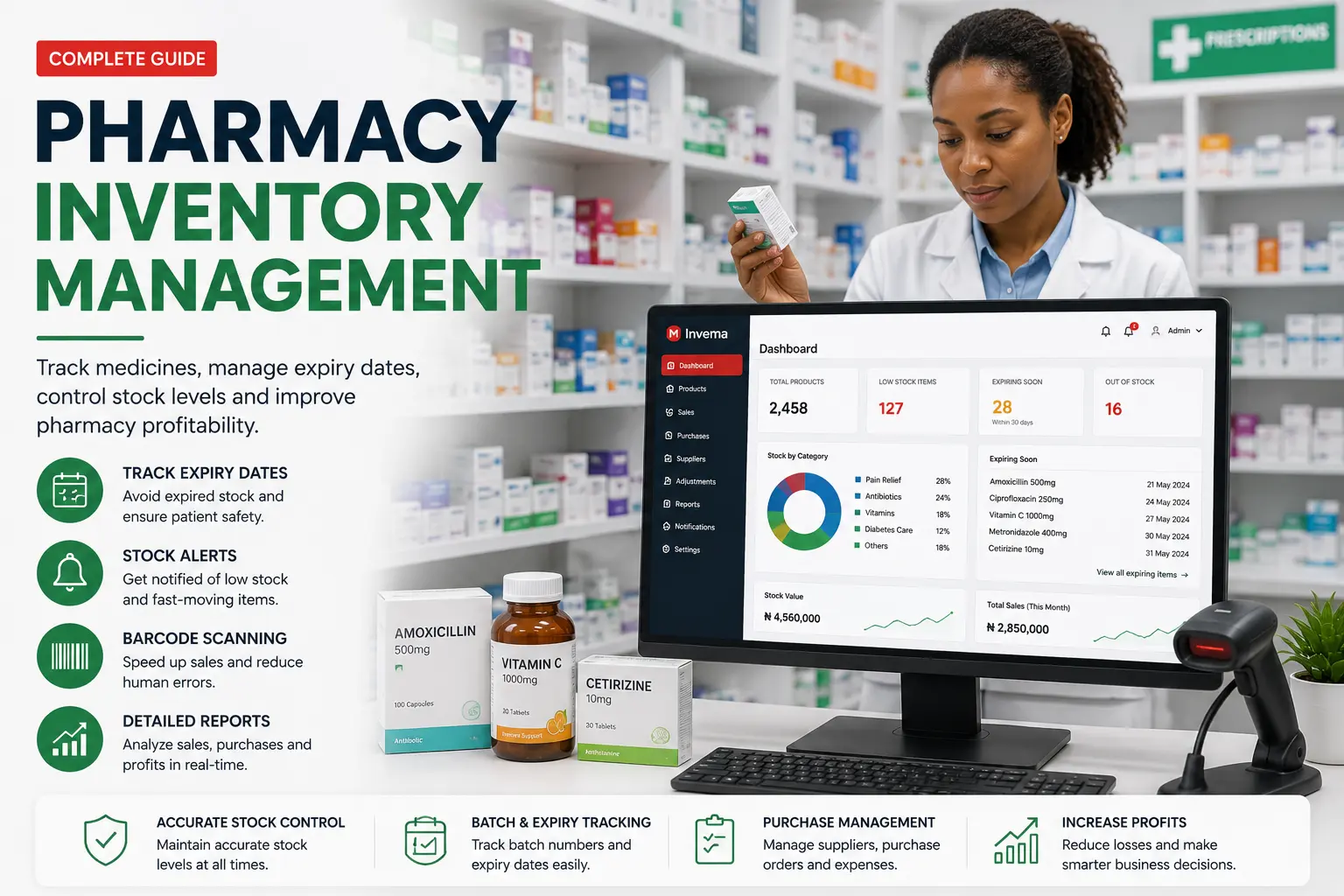
Expiry control is one of the fastest ways to protect pharmacy margin
Drug expiry management is often treated as a compliance task, but for many pharmacies and hospitals in Nigeria it is also a major profitability issue. Every expired product represents lost cash, preventable waste, and a process gap that should have been visible earlier. When the business lacks a dependable way to track expiry dates and batch movement, stock rotation becomes inconsistent and important decisions are made too late. That is why expiry management deserves its own attention within the broader inventory strategy.
The problem is rarely caused by one single mistake. More often, it grows from a series of small gaps: products received without consistent batch entry, shelves not rotated properly, purchasing done without enough movement insight, and reviews that happen only after stock has been sitting too long. Software helps because it turns expiry monitoring into a regular operating process instead of an occasional manual audit. That shift alone can save meaningful value over time.
What strong expiry management should include
The first requirement is visibility. Teams should know what products are approaching expiry, which batches came in first, and where at-risk stock is located. The second requirement is movement discipline. Expiry-sensitive products should follow a clear rotation process so older batches are sold or issued first where appropriate. The third requirement is reporting. Management needs an easy way to review near-expiry items and act before those products become write-offs.
These needs connect closely with pharmacy inventory software and hospital inventory software because expiry control is not separate from general stock management. It is a more sensitive layer inside it. Businesses that manage expiry well usually also manage receiving, movement, and reporting well.
How poor expiry control hurts operations
Expired stock damages more than margin. It also increases stress across the team because staff are forced into rushed decisions about returns, discounts, write-offs, or emergency replenishment. It can weaken trust in the inventory records if quantities appear available but are not truly saleable. It also creates tension in purchasing because money that should have been working in faster products is now tied up in waste. In difficult economic conditions, those losses matter even more.
Expiry challenges often reveal broader stock control problems. If batches are not entered consistently, if counts are delayed, or if the store cannot trace movement clearly, near-expiry surprises become much more common. That is why businesses working on expiry control often also benefit from stronger pharmacy stock control and broader stock management software discipline.
How software helps teams act earlier
Good software should make near-expiry products visible enough that action can happen before value is lost. Management can review which items need promotion, which should be transferred internally, which should be reordered more cautiously, and which suppliers may require tighter buying discipline. The system should also make it easier to trace receiving history, so the team understands why certain items are aging on the shelf.
Usability matters here. If expiry workflows feel complicated, staff will avoid them until the problem becomes urgent. The best approach is a platform that makes batch entry, review, and reporting feel natural inside daily operations. That way, expiry management becomes part of normal stock discipline instead of a separate burden.
Building a culture of rotation and review
Software works best when the pharmacy or hospital also builds clear habits. Receiving should be accurate, shelves should be arranged with rotation in mind, and near-expiry reviews should happen at a predictable cadence. Managers should use the reports to coach better purchasing, not only to react when losses have already happened. Over time, this creates a healthier inventory culture where the team protects working capital more intentionally.
For Nigerian healthcare operators, drug expiry management is one of the most practical areas to improve because the financial benefit is usually clear and the operational gains extend into trust, accountability, and supply reliability. A better expiry process does not only reduce waste. It strengthens the entire inventory system.
Frequently Asked Questions
Why do pharmacies lose money through expiry?
They often buy without enough movement visibility, rotate shelves inconsistently, or fail to review near-expiry products early enough to act.
Can expiry tracking be managed manually?
It can, but manual methods become unreliable as product range and volume increase. Software makes the process more visible and repeatable.
Is expiry management separate from inventory management?
No. It is a critical part of inventory management, especially in pharmacies and hospitals where product sensitivity is higher.